


tl;dr
Go get what’s yours.
I’ve spent a considerable amount of my life believing that I owe myself my best self.

It’s an interesting thing to say when you really think about it, because the word owe implies an obligation. It suggests that something is due, that someone has a claim to it, and that some responsibility exists to make good on that claim. Yet whenever I’ve used the expression, I’ve almost always understood it as an instruction to become someone better. Someone who weighs a certain amount, earns a certain amount, accomplishes certain things, and has developed the discipline to maintain them.
I imagined my best self as a woman who existed somewhere in the future, and my responsibility was to spend the intervening years doing everything necessary to become her. Every new goal became another condition I had to satisfy before I could consider that obligation fulfilled. There was always another version of myself to pursue, another routine to perfect, another season to lock in.
but i’ve recently begun to wonder whether i’ve misunderstood the nature of what i owe myself entirely.
What if my best self isn’t exclusively someone I have to become? What if there are things already available to me that I have simply been unwilling to receive? What if the obligation I’ve been describing has less to do with transforming myself into someone worthy of a different life and more to do with taking responsibility for what has already been placed within my reach?
outside the window
because there’s a peculiar thing that happens when you get close to accomplishing something you’ve wanted for a long time.
You would imagine that the closer you get, the more determined you become. Sometimes that’s true. But other times, the opposite happens. You become distracted. You lose interest. You begin to negotiate with yourself over things that previously required no negotiation. You find reasons to postpone decisions you’ve already made, and opportunities you once prayed for suddenly feel inconvenient. It’s almost as though the possibility of actually receiving something creates a discomfort that the pursuit of it never did. You know that statement don’t meet your heroes? Or a crush is just a lack of information. All the same sensation.
Imagine that someone gives you a voucher for a Chopard bracelet. The bracelet has already been purchased, the transaction has been completed, and the document you’re holding establishes your right to collect it. You’re right outside the proverbial window.
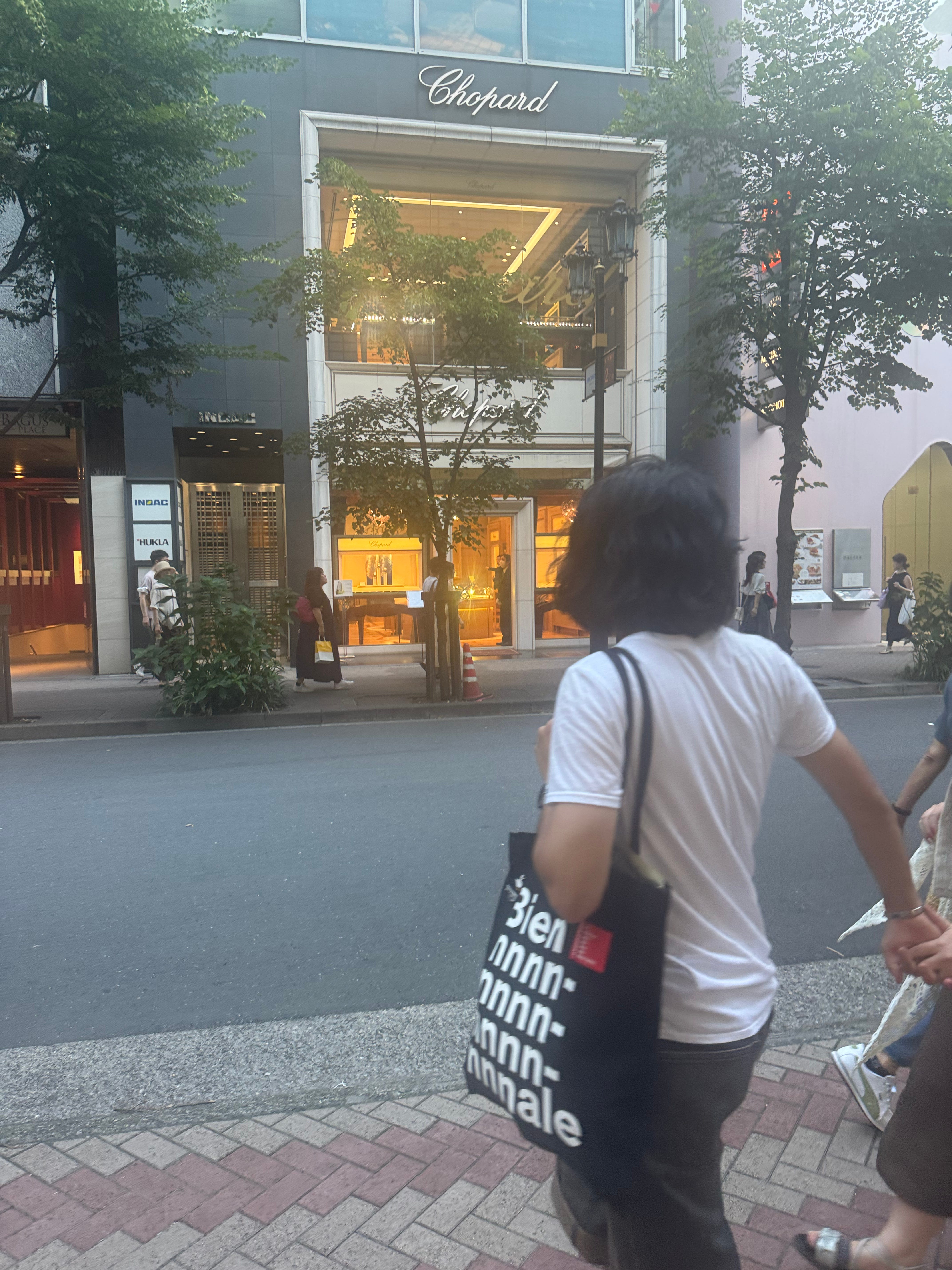
You don’t need to earn the bracelet. You don’t need to persuade the sales associate that you’re a good person, that you’ve worked hard enough, or that you would make a deserving owner. None of those things are relevant to the transaction. The bracelet is being held for you, and the document in your hand is evidence of the obligation of Chopard to deliver it.
all that’s required is that you go to the store and present the voucher.
So you go.
You make your way to the store, arrive outside the glass, and see what you’ve come to collect.
You’re close enough to walk inside, close enough to speak to someone who can give it to you, close enough that the distance between what you have and what you’re entitled to receive has become almost insignificant.
And then something happens.
You suddenly remember another errand. You think about an appointment you need to make, a conversation you need to have, something you should probably go home and finish first. Perhaps you start thinking about where you’ll keep such an expensive bracelet. What if something happens to it? What if you lose it? What if you don’t know how to care for it? Perhaps you don’t even recognize these questions as the reason you’re hesitating. You simply decide you’ll come back another day. And so, with the document still in your hand, you turn around and go home.
What interests me about this scenario is the distinction between the existence of a right and the exercise of it.
The fact that you’re entitled to receive the bracelet doesn’t mean you’re already wearing it. The document establishes a claim, but the claim and the thing being claimed are not identical. You could think of the document as a kind of bond, an instrument representing an obligation that has yet to be satisfied through delivery.
If you want to learn more about bonds, take a look.
A Girl's Guide to the Financial Markets

I remember when I first learned what a financial cycle was, how money rotates from Bitcoin to the markets to everything else. I was so blown away. I was like, what? I don't get it. Fast-forward to now, and I'm sitting here (hopefully) teaching you.
The instrument itself may have value. It establishes that something is owed. But having an enforceable claim against someone is not the same as enjoying the thing that the claim entitles you to receive. In accounting terms, something owed to you and something already in your possession belong to different parts of the ledger. You cannot wear an account receivable (something you’ll have, but don’t quite yet) on your wrist. At some point, the obligation has to be performed, and you have to participate in whatever process makes that performance possible.
This is where turning around becomes more consequential than it initially appears.
You haven’t necessarily lost your right to the bracelet. The store may still be holding it for you tomorrow. But after everything you’ve done, your actual circumstances remain the same as they were when you left home that morning.
You’ve expended time and effort without introducing the thing you set out to obtain into your life.
You can repeat this journey a hundred times, make a hundred plans to return, and spend a hundred evenings imagining what it will feel like when you finally own the (proverbial) bracelet.
But unless something about your behavior changes, none of those journeys will produce the outcome you’re describing. Your proximity to a transaction is not the same as its completion. The intention to receive something is not its receipt. And the fact that you’ve made progress towards changing your circumstances doesn’t necessarily mean you’ve changed them.
someday has arrived
I’ve been thinking about this in terms of inputs. We’re often frustrated that our lives seem to produce the same results, but we don’t always account for the extent to which we’re repeating the same decisions.
We want a different balance without making a transaction that would change it.

We want new circumstances while preserving the habits that maintain our current ones.
Sometimes we even use preparation as a substitute for participation. We research, plan, organize, reconsider, and prepare again, not because we lack the information required to act, but because continued preparation allows us to remain in a familiar relationship with the thing we want. Sound familiar?
As long as it’s something we’re working towards, we don’t have to confront what it would mean to have it. The problem isn’t that preparation has no value. It’s that there comes a point when additional preparation ceases to address any material uncertainty and begins to function as an elaborate way of postponing the transaction.
And I wonder how much of what we call self-sabotage takes place at precisely this intersection between possibility and possession.
We spend so much time talking about the fear of failure that we rarely consider the particular discomfort associated with success. Failure, especially when it’s familiar, comes with a certain predictability. You know what happens when the business doesn’t work, when you don’t reach the financial goal, when you don’t finish the project. You know what disappointment feels like. You know how to explain it, how to recover from it, and how to imagine trying again. But what happens when the business works? What happens when the invoice is paid? What happens when the book is finished, the opportunity is offered, or the thing you’ve been asking for is finally standing in front of you?
Suddenly, the question is no longer whether you’re capable of obtaining it. The question is whether you’re prepared to assume responsibility for it.
The person who wants the bracelet has a comparatively simple responsibility. She has to pursue it. The person who possesses the bracelet has a different set of responsibilities altogether. She has to decide how to care for it, how to protect it, what to do with it, and what it means to have something valuable in her possession. This applies to relationships too by the way. That’s why attraction isn’t proof of that someone is meant to be in your life, and walk with you to your True Destiny.
Receiving something can create obligations that didn’t exist when it was merely an ambition. And perhaps that is part of what makes receiving uncomfortable. Once the thing becomes real, we lose the freedom to relate to it exclusively through our imagination.
We can no longer spend all our time thinking about what we’ll do someday.
Someday has arrived, and now our decisions have consequences.
where is it written?
But before taking this argument any further, there’s a distinction I think is essential. The fact that I want something does not establish that it’s mine. Desire is not evidence of ownership, and conviction alone cannot create an obligation in someone else. The store in my example owes me the bracelet because an actual transaction has taken place. If no bracelet had been purchased, no promise had been made, and no document existed, my standing outside the window insisting that the bracelet belonged to me would not make it so. No amount of standing in proximity to it would.
I could want it desperately. I could believe that owning it would change my life. I could even have very good reasons for wanting it. But none of those things would establish a right to demand it from the store. Before we can discuss the courage required to claim something, we have to establish whether there is a legitimate claim in the first place.

This is why I’ve become interested in the question, Where is it written? Not as a way of reassuring myself that everything I want will eventually belong to me, but as a way of examining the foundation of what I believe. A serious claim requires more than emotional certainty. What is its source? Who has undertaken the obligation? What exactly was promised? Are there conditions attached to receiving it? And what action, if any, am I responsible for taking?
These questions matter because a right, a freedom, and a power are not the same thing.
I can have the freedom to pursue something without having a right to receive a particular outcome. I can have the power to take an action that changes my circumstances without having the authority to compel someone else to respond in the way I desire. Confusing those distinctions turns ambition into entitlement.
But failing to exercise a legitimate right creates the opposite problem.
It reduces something genuinely available to me to little more than a possibility I spend my life admiring from a distance.
Think about getting a rental car. Suppose you’ve reserved a luxury vehicle, and the agreement guarantees you a a luxury vehicle, but that doesn’t necessarily mean it owes you the particular Mercedes you imagined driving.
The obligation is defined by the agreement, not by the picture in your mind.
You can insist on receiving the luxury vehicle you reserved while remaining open to the different vehicles that might legitimately satisfy that obligation from the perspective of the rental company. I find this especially interesting when I think about the promises of God. There’s a difference between believing that God has promised to provide for me and deciding, without further basis, that His provision must appear as a particular monthly income, a specific business outcome, or a place on a bestseller list.
there’s a difference between trusting Him with my future and assuming that a particular person must become part of it.

The reliability of the one making a promise doesn’t eliminate my responsibility to understand what was actually promised. In fact, the more seriously I take the promise, the more carefully I ought to examine its terms and who made it in the first place.
That’s an important difference because I’ve noticed how easily we confuse the strength of our desire with the strength of our evidence.
We can become so attached to a particular outcome that we begin treating every disappointment as though an obligation to us has been violated, this is where a lot of people, the girlies especially start to feel betrayed by God.
But being disappointed isn’t always the same as being wronged. A person may owe me honesty, but that doesn’t mean they owe me affection. I may have the freedom to write a book, the opportunity to publish it, and the responsibility to do everything reasonably within my power to bring it before readers, without possessing a contractual right to a place on the New York Times bestseller list. FOR EXAMPLE.
The distinction doesn’t diminish the ambition. It simply identifies what I can legitimately claim, what I can responsibly pursue, and what remains outside my authority.
The world doesn’t owe me everything I want. But neither should I behave as though I have no claim to anything at all.
believe in your ability
This is where my understanding of faith has been changing. For a long time, I thought about belief primarily in relation to my confidence in myself. All you have to do is look back at previous articles on here to be honest.
Did I believe I could accomplish something? Did I believe I had what it took? Did I believe I would follow through? My very first Pinterest username was Believe In Your Ability, which I find almost comically appropriate now.
Because the more I’ve examined that instruction, the more I’ve realized how complicated it becomes when the person you’re being asked to believe in has a history of inconsistent results.
I’ve been extraordinarily disciplined in some seasons and remarkably inconsistent in others. There are things I’ve followed through on and things I’ve abandoned. There are decisions I’m proud of and decisions I’d rather never think about making. So when I look at my previous behavior for proof that I’ll accomplish something in the future, I find evidence pointing in more than one direction.
But variable results are not the same as a fixed incapacity. The fact that I’ve behaved differently across different circumstances tells me something about my history, not necessarily everything about my future.
And yet it’s easy to treat a previous pattern as though it were a binding judgment.
I’ve failed to maintain a habit before, therefore I cannot maintain it now.
I’ve mishandled an opportunity before, therefore I’m incapable of managing another.
I’ve made an impulsive financial decision before, therefore I can never become someone who manages money well.
We take evidence of past behavior and allow it to become the final authority over what we’re willing to attempt next.
I think this happens partly because we don’t respect belief as much as we think we do.
We treat it as a feeling that must be supplied by circumstances, rather than a conviction whose grounds we have a responsibility to examine.
Belief is a conviction, not a set of circumstances.
So much of what we believe is inherited from the confidence of other people. We trust the judgment of institutions, experts, people online, and people whose opinions matter to us. Sometimes that’s reasonable. We can’t personally verify everything we rely upon, and sound judgment often requires recognizing trustworthy sources of evidence. But there is a difference, especially in a social media era, between relying on credible evidence and contracting out the responsibility of forming convictions altogether.
We can become so accustomed to believing what other people believe that we scarcely notice when their certainty has become a substitute for our own judgment.
We begin looking for permission to believe something instead of examining whether we have sufficient reason to believe it.
And when it comes to ourselves, the consequences of that habit can be enormous. If I only believe I can do something when other people are impressed by my ability, my convictions become dependent on their assessments, e.g. people pleasing. If I only believe I can succeed when my recent performance has been perfect, my confidence disappears whenever my results vary. If I depend on the absence of fear to tell me whether a decision is right, I give my emotions authority they may not deserve. None of these are particularly stable foundations for a life. And the irony is that I can have extraordinary confidence in institutions whose internal workings I barely understand while withholding confidence from a course of action I’ve actually examined and found reasonable.
let’s be objective here for a second ladies, we’re all discerning women after all.
The alternative, for me, is not simply to manufacture more confidence in myself. It’s to become more deliberate about the authority on which I base my convictions.
As a Christian, I believe that God’s character is constant even when my behavior isn’t. His principles don’t become less trustworthy because my performance has varied. But that doesn’t mean I can substitute confidence in God for discernment. Him being faithful alone can’t establish the truth of something He never promised me. Rather, it gives me a reason to examine what He has promised me. In other words, just because He’s faithful, doesn’t mean he has to fulfill everything I have faith for. He only has to fulfill what He’s given me a bond or promise for.
Faith, understood this way, doesn’t eliminate the responsibility of thinking. It gives that responsibility greater significance.
what is owed?
There are two episodes in the Gospels that have been occupying my mind.
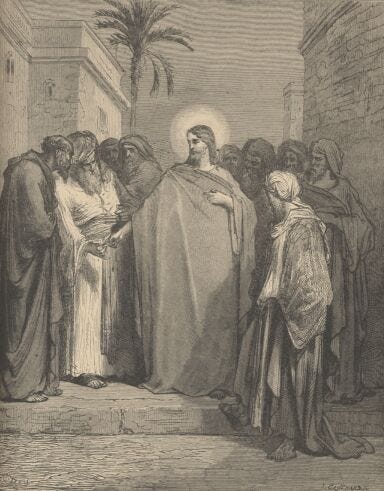
In one, Jesus instructs His listeners to render to Caesar what belongs to Caesar. In another, when the temple tax becomes an issue, He directs Peter to obtain a coin from a fish and use it to pay. These are separate incidents, but the questions of obligation and action are what interest me about both.
What is owed? To who is it owed? What action is appropriate in light of that obligation?
I find something deeply clarifying about the simplicity of those questions. We have a tendency to introduce endless additional considerations into situations where the essential issue has already been established. We ask whether we feel ready, whether we’ve become the right person, whether we might be embarrassed, whether we’d rather return another day. And sometimes those questions are relevant. But most times, they’re irrelevant considerations that we’ve allowed to delay the performance of an obligation or the exercise of a legitimate opportunity. We hold ourselves back.
The ability to distinguish between those two situations is part of what makes courage intelligent, and intelligence when submitted to wisdom makes you essentially unstoppable.
Courage isn’t refusing to consider evidence or deciding that every hesitation must be defeated. There are genuine reasons to delay, reconsider, and decline opportunities. New information can change the wisdom of a decision. But when the material facts have been established, and the next course of action is reasonably clear, how much authority should an unexamined feeling of discomfort have over the outcome?
If I’ve already determined that something is right, that it belongs to me, or that I’m responsible for doing it, why should I require a new emotional permission slip every time the moment to act arrives? What am I waiting for? At some point, constantly reopening a settled question becomes another way of avoiding its consequences.
at some point, you must act outside of the imagination.
This is especially important because having a legitimate claim doesn’t guarantee that exercising it will be effortless.
You can walk into Chopard and they can still refuse to give it to you. You can have evidence of an obligation and still encounter resistance when you attempt to enforce it.
The existence of a right, the recognition of that right, and the actual remedy for its violation are separate matters. If someone has borrowed something that belongs to you and refuses to return it, your ownership doesn’t disappear simply because they’re being difficult. But neither does your ownership automatically retrieve the property. You may need to ask for it, present evidence, negotiate, or pursue whatever legitimate means of recovery are available.
There’s an important difference between believing that (1) resistance means your claim to something isn’t legitimate and (2) understanding that through the presence of resistance a valid claim has to be exercised. Just because you have the voucher or bond at Chopard, doesn’t mean the item just comes to you.
And perhaps this is the identity shift I’ve been trying to articulate.
For years, I approached improvement as though every new accomplishment required me to become an entirely different woman. I had to become the woman who could manage money, the woman who could finish a book, the woman who could care for her body, the woman who could consistently follow through on her responsibilities. I treated those versions of myself as separate identities, almost as though I were trying to obtain citizenship in a country I didn’t yet belong to, but if I just worked hard enough and became hard enough, they’d let me in. But what if the territory is already mine to occupy? What if the difference between where I am and where I want to be is not always a difference in identity, but a difference in how I inhabit the life I’ve been given? The same person can occupy different places within the same territory, we can both be in America geographically, but in different parts of it. I don’t have to regard my present self as an obstacle to the existence of my future self. Just because I’m in DC this morning, doesn’t mean this same me, in this same day, can’t go to LA. I can understand the movement between them as an exercise of responsibility within the same life. All I’d have to do is book a flight.

then the money arrives
Of course, that responsibility doesn’t end at the moment of receiving. In fact, I suspect that receiving is where another, equally important problem begins. Imagine someone who spends years trying to reach a particular financial position. They work, save, pray, plan, and imagine what their life will look like when they finally have the figure they’ve romanticized as their freedom. Then the money arrives. And instead of taking the time to understand their new position, they begin making decisions that put it at unnecessary risk. They spend impulsively, commit themselves to expenses they haven’t thought through, or take an unresearched trade that could wipe out a substantial portion of what they’ve received. The behavior may look like excitement, confidence, or an appetite for risk. But what if, in some cases, it’s something else? What if the person is uncomfortable with the responsibility of having money and is making decisions that would relieve them of that responsibility?
It’s worth considering because losing something can return us to a familiar set of circumstances.
When the money is gone, the difficult questions about what to do with it disappear. You no longer need to decide how to allocate it, invest it, protect it, or multiply it. You can return to the comparatively familiar work of trying to obtain it again.
The loss may be painful, but it also restores a situation you understand. I don’t think every reckless financial decision is motivated by this fear. Sometimes people are simply misinformed, overconfident, impatient, or caught in genuinely difficult circumstances.
But the possibility of using destruction as an escape from responsibility deserves examination.
Especially when the same person repeatedly acquires something valuable and then behaves in ways that make its retention unlikely.
This is also where the distinction between courage and recklessness becomes essential. Making a large financial decision without analysis simply because you have the money to do so isn’t necessarily courageous. Sometimes the courageous decision is refusing to act at all. It’s having the patience to protect what you’ve earned, the humility to acknowledge what you don’t know, and the discipline to act only when your criteria have been satisfied. You may have spent years developing the ability to earn money and almost no time developing the habits required to manage it. And without those habits, every increase can become another opportunity to repeat the same cycle. The amount changes, the opportunities change, and the stakes change, but the underlying pattern remains remarkably consistent.
this is why i’ve begun to think about discipline as stewardship.
Previously, I understood discipline primarily as the means through which I could obtain the things I wanted.
If I was disciplined enough, I would reach my goals. But that understanding is incomplete because acquisition and stewardship are different responsibilities. The discipline required to earn money is not identical to the discipline required to preserve and multiply it. The discipline required to complete a manuscript isn’t identical to the discipline required to publish, distribute, and support a book. The discipline required to develop a healthy routine isn’t simply the ability to reach a number on a scale. It includes the capacity to maintain practices that support the body you’re responsible for caring for. Receiving something doesn’t eliminate the need for discipline. It changes the nature of the discipline required. And that, ladies, is why a lot of men and women I guess, cheat. Are you seeing that there’s nothing new under the sun?
And this has made me wonder whether some of our most destructive habits are rooted in a misunderstanding of what it means to have something. We think possession is the conclusion of the story, when in many cases it’s the beginning of an entirely new set of obligations. The moment something becomes yours, you have decisions to make that didn’t previously exist. You acquire not only the benefits associated with possessing it, but also the responsibility of determining how those benefits will be used. Money introduces decisions about allocation and risk. Opportunity introduces decisions about commitment and follow-through. Influence introduces decisions about responsibility to other people.
Possession is not merely a reward for the effort that preceded it. It is a new condition under which our judgment is exercised.
In that sense, stewardship may be an even more demanding expression of belief than acquisition. When you’re pursuing something, it’s relatively easy to talk about how much you want it and how extraordinary your life will become when you finally receive it. But stewardship requires you to demonstrate, through ordinary decisions, that you take the value of what you’ve received seriously. It requires consistency after the excitement has disappeared.

It requires restraint when an impulsive decision would feel more satisfying. It requires refusing opportunities that threaten what you’re responsible for preserving. It requires making decisions in the present that honor the value of something beyond the present moment. Do you see why stewardship requires you to exercise a compeltely new set of muscles. It requires accepting that you have a responsibility to the thing you once spent so much time asking to receive.
two failures
I keep returning to the bracelet because the two failures are so clearly visible in that example. The first happens when you arrive at the store and turn around before collecting it. The second happens when you collect it and then treat it so carelessly that you lose it. In the first instance, you never convert your claim into possession. In the second, you obtain possession but fail to exercise the responsibility that comes with it.
Both can leave you without the bracelet, but they are not the same problem. The first concerns the courage to act on what is available to you. The second concerns the discipline to care for what you’ve received. And I think we make a mistake when we try to solve both problems with the same language of ambition, motivation, and self improvement.
Because what would another season of motivation accomplish if the actual problem is that I keep walking away from opportunities I’m already prepared to pursue? What would another financial goal accomplish if I haven’t addressed the habits that make my existing resources difficult to hold on to? What would another promise to become my best self accomplish if I continue to define that version of myself as someone who exists only after all my present responsibilities have been discharged?
there has to be a point at which i stop treating my life as an endless preparation for the life i intend to live.
And there’s something else that makes this uncomfortable to acknowledge. Sometimes we’re waiting for God to change circumstances that we’re unwilling to participate in changing ourselves.
We pray for opportunities while leaving the ones available to us unexplored.
We ask for provision while refusing to make responsible decisions with the resources already in our hands.
We repeatedly ask for clarity after receiving enough information to take a reasonable next step.
Prayer is not a substitute for judgment, and faith doesn’t remove the obligation to act. I don’t mean that every difficult circumstance is the consequence of someone failing to exercise responsibility. People encounter obstacles they didn’t choose and can’t independently remove.

But when something genuinely has been placed within my power to do, I have to consider whether continuing to ask for an outcome without taking the corresponding action is an expression of faith or an avoidance of responsibility.
That question is particularly confronting because turning around often feels innocent. Nothing dramatic happens. You don’t make a speech announcing that you’ve decided to abandon the thing you wanted. You just postpone it. You go home, attend to Trader Joe’s instead, tell yourself you’ll return when the time is right, and resume the ordinary course of your life. But the ordinary course of your life is precisely what you’ve been saying you want to change.
And if the next opportunity produces the same decision, and the opportunity after that produces the same decision, you may eventually have to confront the fact that you’re not simply waiting for your circumstances to change. You’re repeatedly participating in their preservation.
There’s an important difference between waiting for something to become available and refusing to receive something that already is. The first may require patience. The second may require courage. And until I distinguish between the two, I can spend a remarkable amount of time applying the wrong virtue to the wrong problem. I can tell myself to be patient when I actually need to act. I can tell myself to act when I actually need to be patient. I can mistake fear for wisdom and just being plain reckless for faith. The work isn’t simply to become more assertive, more ambitious, or more willing to take risks. It’s to develop the judgment to understand what a situation requires, and then the willingness to do it. This is maturity by the way.
an acquired taste
Perhaps that’s what makes courage such an interesting thing to describe as an acquired taste.
We often talk about courage as though it’s a quality some people naturally possess and others must struggle to develop. But an acquired taste is something we learn through experience. You can read about caviar, its various types, study its history, understand why people value it, and imagine the kind of person who might enjoy it. None of those things will teach you what it tastes like.
At some point, you have to try it. And the first experience may not feel the way you imagined. It may be unfamiliar, even uncomfortable. The unfamiliarity doesn’t necessarily mean something has gone wrong. It may simply mean that you’re encountering something you haven’t yet learned how to receive.
I think courage works that way too. The first time you act without waiting for complete emotional reassurance, the experience may feel uncomfortable. The first time you receive something valuable and refuse the impulse to waste it, the responsibility may feel unfamiliar. The first time you allow yourself to inhabit circumstances you’ve spent years imagining, you may discover that they feel surprisingly ordinary. Perhaps we have invested so much emotional energy in the anticipation of certain things that we’ve forgotten they are ultimately meant to become part of our actual lives. Vision is a means to an end. To everything there is an end. The goal isn’t to remain perpetually astonished by the possibility of possessing them. It’s to become capable of living responsibly with what has arrived.

what i owe myself
So I’ve been reconsidering what I mean when I say that I owe myself my best self.
I don’t think the obligation is to spend my life trying to become a person who will finally deserve good things. Nor do I think my desires create obligations that the rest of the world must satisfy. I think the obligation is to take an accurate account of what I’ve been given, what I can legitimately claim, what I’m free to pursue, and what remains my responsibility to do. It’s to develop convictions substantial enough to guide my actions without requiring constant reassurance. It’s to stop using preparation to put off actually participating in my life, and to understand that the responsibility of receiving something doesn’t end when it comes into my possession.
I owe myself the willingness to exercise the opportunities and abilities already available to me. I owe myself the discipline to protect and steward the resources I have, rather than treating every increase as an invitation to begin again from nothing.
Read that again. Before you start imagining that guy as the Guy You Wrote Down, examine what is objectively before you.
And most importantly, however, where I believe God has made a promise, I owe it to myself to examine that promise carefully enough to distinguish what He has said from what I’ve merely hoped He would say.
I can approach Him with thanksgiving, in need of mercy, trusting His character, without treating my own desires as though they were binding instructions to heaven. The foundation of my confidence isn’t that I’ve become exceptionally deserving. It’s that I’ve learned to distinguish between what has been promised, what has been entrusted to me, and what I must take responsibility for doing.
The more I think about it, the more I realize that the woman who walks into the store isn’t necessarily more intelligent, more beautiful, more deserving, or even more disciplined than the woman who turns around.
She may have exactly the same fears. She may have precisely the same history of inconsistency. She may still be uncertain about what it will feel like to own something she’s wanted for so long.
but she’s made a different decision.
And that decision introduces something into her life that wasn’t there before. She’s no longer merely a person carrying evidence of an obligation. She’s now a person who has acted on it. And from that moment forward, the question changes. She no longer has to ask whether she has the courage to collect the bracelet. She has to decide what kind of owner she’s going to be. She’s now in the position to take responsibility for the identity of owner she’s been so desiring.
Maybe that’s the part of becoming our best selves that we don’t talk about enough. There’s a courage required to pursue things, another courage required to receive them, and a discipline required to live responsibly with them once they arrive. We tend to celebrate the pursuit because it gives us something to anticipate and admire.
But a life cannot be lived entirely in anticipation.
Eventually, the things we want have to become decisions we make, responsibilities we accept, and realities we learn to inhabit.
And if I have the bond in my hand, if I’ve established what it entitles me to receive, and if there’s nothing material preventing me from walking through the door, I have to ask myself what another journey home is going to accomplish. What another week spent avoiding the completion of my projects is going to accomplish. What another day spent in a relationship that wasn’t meant for me is going to accomplish. What another year, spent in waiting is going to accomplish.
I can tell myself I’ll return when I’m more confident, more prepared, or more certain of what I’ll do with the bracelet.
But if the only thing I accomplish by turning around is the preservation of my existing circumstances, then I have to stop pretending that the decision is moving me closer to something or someone new.
At some point, I have to walk inside.
I have to present what is in my hand, receive what it entitles me to receive, and accept responsibility for what happens after that.
Go get what’s yours.
Love you,
Zozo